

Index
- Why hand-dye clothes
- Tools needed for dyeing clothes
- Preparing the fabric before dyeing
- Hand Dyeing Cotton: Step-by-Step Procedure
- Fabric color fixation for long-lasting results
- Common mistakes and how to avoid them
- Dyeing natural vs. synthetic fibers
- Safety and sustainability considerations
- Frequently Asked Questions
Last updated: August 15, 2026
Why hand-dye clothes
Hand-dyeing clothes transforms faded, stained, or dated pieces, restoring them to their former glory. DIY allows for complete control over the final result, from the exact shade to creative techniques like tie-dye . Sustainability plays a key role: instead of purchasing new items, extending the life of existing ones reduces the environmental impact and clothing budget. For those with cotton, silk, wool, or semi-synthetic natural fibers, home dyeing represents a real opportunity for renewal. The beauty of hand-dyeing clothes is that it doesn't require expensive equipment or specialized skills. With a few tools and the right dyes, anyone can transform a garment in just a few hours.
Tools needed for dyeing clothes
To dye clothes by hand, you need a few essential items, most of which you already have in your kitchen.
Containers and pots. A large stainless steel or enameled pot is essential: it must hold the garment with ample space for water and allow for good fabric circulation. Avoid aluminum, which can react with some dyes.
Protective gloves. Latex or nitrile gloves prevent difficult-to-remove stains and protect against possible irritation.
Wooden or plastic spoons. Use dedicated utensils to stir and lift the fabric. Don't use kitchen utensils: dyes can leave permanent traces. Aybel also offers sponge sets for €7.95 for more precise and creative application techniques.

Thermometer. Many dyes require specific temperatures, often between 60 and 85 degrees Celsius.
Kitchen scale. Weighing the dry garment and dyes ensures correct proportions and consistent results.
Optional but useful accessories. Aybel's multipurpose brush set (€14.95) allows you to apply colorants with precision for tie-dye effects or spot touch-ups.


Preparing the fabric before dyeing
Preparation is crucial for a uniform result. An unprepared fabric absorbs the dye unevenly.
Pre-wash. Wash the garment with warm water and a neutral detergent to remove manufacturing residue, sizing, and accumulated dirt. Rinse thoroughly until the water runs clear.
Fabric moisture. The garment should be damp but not dripping when it enters the dye bath. A completely dry fabric absorbs the dye unevenly; a soaked fabric dilutes the dye.
Fabric weight. Weigh the dry garment. This measurement is crucial for calculating the correct dye proportions. Most Aybel dyes are dosed based on the dry weight of the fabric.
Fiber check. Check the garment label to identify the fibers. Cotton, linen, silk, and wool accept reactive dyes excellently. Synthetic fabrics like polyester require specific dyes and different temperatures.
Hand Dyeing Cotton: Step-by-Step Procedure
Cotton is the easiest fiber to hand dye and gives excellent results with reactive dyes.
Preparing the dye bath
Calculate the proportions. Use the wet weight of the garment to measure the dye according to the directions on the Aybel package. Too little dye produces pale colors; too much dye creates oversaturated areas.
Prepare hot water. Fill the pot with water between 60 and 85 degrees Celsius. L that's too cold won't activate the dye; too hot can damage delicate fibers.
Dissolve the dye. Pour the Aybel powder into a small amount of warm water, stirring until you obtain a smooth, lump-free paste. Gradually add the paste to the hot water in the saucepan, stirring constantly.
Add salt. Salt (sodium chloride) acts as a fixative. When you add salt to the dye bath, the salt molecules interact with the dye molecules and the fibers, facilitating the transfer of color from the solution to the fiber.
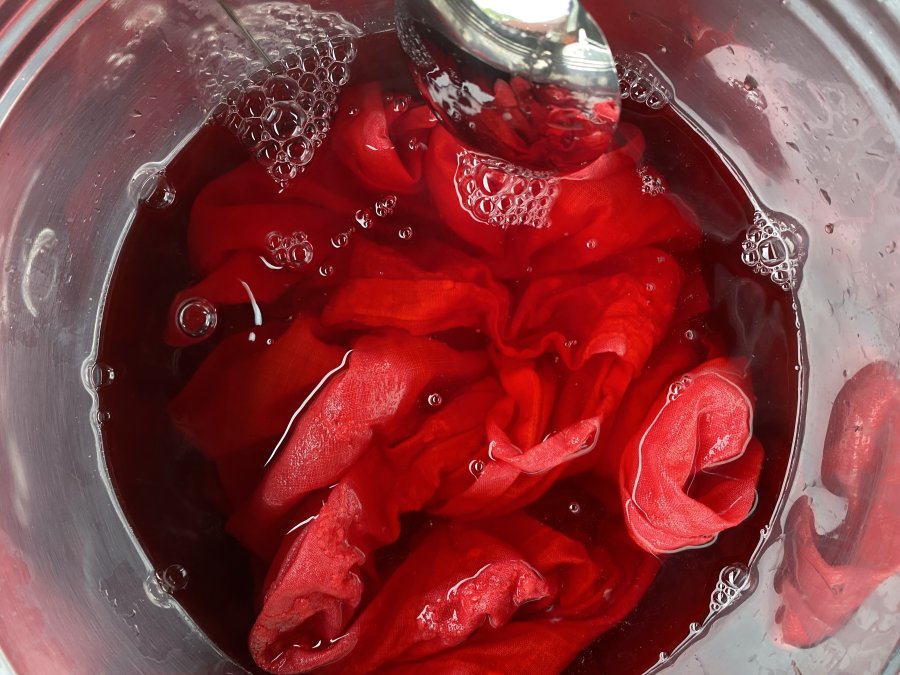
Immersion and agitation
Initial immersion. Slowly lower the damp garment into the dye bath, ensuring it is completely submerged. Gently press the fabric down with a wooden spoon.
Constant agitation. For the first 10-15 minutes, agitate the garment every 2-3 minutes. Lift the fabric from the bottom, let the water run, and then set it back down. This movement ensures that the dye reaches all the fibers evenly. After the first 15 minutes, reduce the agitation to every 5-10 minutes.
Soaking time: On average, 30-45 minutes is sufficient for a saturated color. Longer soaking times produce more intense shades. Consult Aybel's specific instructions for your dye.
Monitor the temperature. If the bath cools down, warm it gradually. Don't increase the temperature abruptly, as this could cause thermal shock to the fabric.
Rinse and final wash
First hot rinse. Remove the garment from the bath and rinse it under running water at a temperature similar to that of the dye bath. Continue rinsing until the water runs almost clear.
Rinse successively at decreasing temperatures. Follow with warm water rinses and finally cold water. Continue until the water runs completely clear.
Final wash. Wash the garment with a mild neutral detergent in cold water. Rinse again until no more suds appear.
Drying. Wring out the garment gently and hang to dry in the shade. Avoid the dryer for the first 24 hours.
Fabric color fixation for long-lasting results
Fixing transforms temporary color into lasting color. Without fixing, the garment will fade with each subsequent wash.
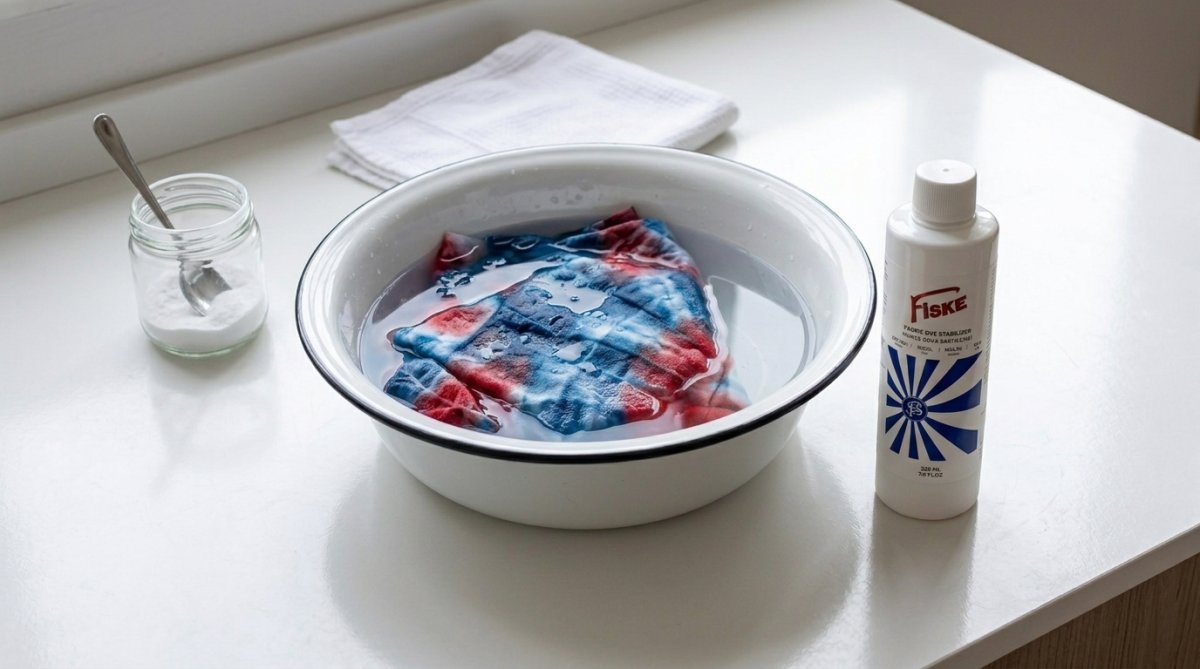
Chemical fixatives. Aybel's Fiske L (€4.99) is a professional fixative formulated to stabilize color in fibers. After the final wash, soak the garment in a solution of Fiske diluted in cold water for 20-30 minutes, shaking occasionally.
Fixation time. Fixes color within 24 hours of dyeing, while the dye is still active.
Post-fixing care: Always wash dyed garments with similar colors in cold water and with mild detergents. Avoid hot water and the dryer for the first 5-10 washes.
Common mistakes and how to avoid them
Uneven color and stains. This occurs when the fabric hasn't been properly prepared or agitated enough. Solution: Always pre-wash the garment and make sure it's damp before immersing it. During dyeing, agitate the garment every 2-3 minutes for the first 15 minutes.
Color too pale. This is often due to an insufficient amount of dye or too low a temperature. Solution: Check the weight of the garment and the dosage on the Aybel packaging. Maintain the temperature between 60 and 85 degrees Celsius.
Color too dark or too saturated. Too much dye creates black or gray areas. Solution: Next time, reduce the amount by 20-30%.
Rapid fading after a few washes. Indicates inadequate or no fixative. Solution: Always use a fixative such as Aybel Fiske within 24 hours of dyeing. Wash the dyed garment in cold water with mild detergents.
Felted or shrunken fabric. This happens when the water temperature changes suddenly. Solution: Maintain a constant temperature while dyeing and stir gently.
Unpleasant odor after dyeing. Solution: Rinse thoroughly and let the garment air dry for 24-48 hours.
Dyeing natural vs. synthetic fibers
Not all fabrics behave the same way when dyeing.
Natural fibers: cotton, linen, silk, wool. These fibers readily accept reactive dyes. Cotton and linen dye quickly and evenly. Silk requires slightly lower temperatures (60-70 degrees Celsius). Wool is pH-sensitive: adding a tablespoon of white vinegar to the bath stabilizes the color and protects the fibers.
Synthetic fibers: polyester, acrylic, nylon. These fabrics repel water and dyes. Pure polyester cannot be dyed with standard reactive dyes; it requires disperse dyes and much higher temperatures, which are virtually impossible at home. Nylon absorbs dye better but often produces different shades than cotton. L is even more difficult to dye.
Blended fabrics. A cotton-polyester garment will dye, but the polyester will remain paler. If the garment contains a significant percentage of synthetics, expect less saturated results.
How to check the composition: Always check the garment's label. If it's unclear, burn a small fiber loosened from the garment. Natural fibers burn with a papery or hairy odor; synthetics melt and produce a chemical odor.
Safety and sustainability considerations
Hand dyeing is a safe activity if followed with awareness.
Personal protection. Always wear latex or nitrile gloves when handling dyes. Use an apron to protect your clothing. If dye dust gets in your eyes, rinse immediately with plenty of water. Work in a well-ventilated area.
Responsible disposal. Do not pour residual dye bath down the drain. Leave the bath in a closed container until the dye has completely settled to the bottom, then pour the clear water down the drain and dispose of the residue as chemical waste at a local collection center.
Sustainability of the practice. Hand-dyeing extends the life of a garment by 2-5 years, reducing the need to purchase new clothing. Producing a new garment requires significant water and energy resources; home dyeing reduces the impact by several orders of magnitude.
Eco-friendly dyes. Aybel offers a range of products formulated to minimize environmental impact. Modern reactive dyes are biodegradable and contain no heavy metals.
Hand-dyeing clothes is a skill that transforms your relationship with your wardrobe. Instead of discarding faded or stained items, you can revitalize them to your liking. Aybel provides everything you need: professional-quality dyes , Fiske Fixing Agent for long-lasting results, and accessories like the Brush Set and Sponge Set for creative techniques. Start with a simple cotton garment, follow the steps carefully, and you'll discover that professional results are completely within your reach.
Frequently Asked Questions
What is the easiest way to hand dye clothes?
The simplest method is immersion dyeing: prepare a dye bath in hot water (according to the product instructions), immerse the pre-washed garment, and agitate regularly for 30–45 minutes. Make sure the fabric remains completely submerged to achieve an even color. After rinsing, use a fixative such as Fiske Fixative to protect the color from subsequent washes.
Is it better to dye fabrics in hot or cold water?
Warm L is preferable for most dyes, as it helps the color adhere better to the fibers. Cold L can be used for some types of natural dyes, but it generally produces less intense and uniform results. Always check the specific instructions for the dye you use, as some require specific temperatures for best results.
How to prevent color fading after washing?
Color fixing is essential for durability. Use a professional fixing agent like Fiske Fixing Agent immediately after the final rinse. Also, wash dyed garments in cold water with mild detergents, avoid bleach, and dry in the shade. A quality fixing agent can significantly prolong the color's vibrancy over time.
What types of fabrics can be successfully hand-dyed?
Natural fibers like cotton, wool, and silk are easily hand-dyed and absorb color evenly. Semi-synthetic fibers like linen also work well. Pure synthetic fabrics (polyester, acrylic) are more difficult to dye and may not absorb color satisfactorily. Always check the fabric's composition before starting.